
What an IMEI Number Is and Why Every Wireless Dealer Should Understand It
What an IMEI Number Is and Why Every Wireless Dealer Should Understand It
A lot of people in wireless hear the word IMEI and immediately think it’s some technical thing they can ignore.
That’s a mistake.
If you’re selling phones, activating lines, helping customers switch carriers, checking used devices, or dealing with bring-your-own-device setups, IMEI matters. A lot. Not because it sounds fancy, but because it helps answer one of the most important questions in this business:
Will this phone actually work, and is it clean?
That’s what dealers need to understand.
I’ve been in this business long enough to tell you straight: small details like this are where stores either look sharp or look lost. The dealers who know how to explain things clearly build more trust, avoid more problems, and move faster when customers walk in with questions.
And this is one of those things customers ask about all the time.
So let’s keep it simple.
An IMEI is basically your phone’s identity number. It’s what helps carriers and systems recognize a specific device. If you’re checking compatibility, activating service, troubleshooting issues, or verifying whether a phone has a problem tied to it, the IMEI is part of that process.
It’s not complicated once somebody explains it the right way.
IMEI Is the Phone’s Identity
IMEI stands for International Mobile Equipment Identity.
That sounds more technical than it really is.
What it means in plain language is this: every cellular device has its own unique identification number. Think of it like the serial number that tells the network exactly which device it’s dealing with.
That matters because not every phone is ready for every network, and not every device should be activated without being checked first.
A lot of customers come into stores assuming that if a phone turns on, it should work anywhere. That’s not how it goes in real life.
A phone can look perfectly fine and still have issues:
it may not be compatible with the network
it may be locked
it may have been reported lost or stolen
it may have activation problems tied to the device history
That’s why the IMEI matters. It helps verify the phone before problems show up later.
Why Dealers Need to Care About IMEI
This is not just customer information. This is dealer information too.
If you’re in the prepaid business, IMEI comes up all the time. Bring-your-own-device customers ask if their phone works. Customers buying used phones want to know if the device is safe to activate. Some people are switching networks and need to confirm compatibility before they spend money. Others are troubleshooting device issues and need help figuring out what they’re actually working with.
That’s everyday store activity.
A dealer who understands IMEI can move those conversations faster and with more confidence. A dealer who doesn’t understand it ends up guessing, stalling, or giving weak answers.
That hurts trust.
When customers feel like you know what you’re doing, they’re more comfortable buying from you, switching with you, and coming back to your store later.
That’s why this matters.
What IMEI Helps You Check
In a real store, IMEI is useful because it helps answer practical questions.
Can this phone be activated?
Is this device compatible with the network?
Is this used phone clean or is there a problem attached to it?
Is this the actual model the customer says it is?
That’s the real value.
It helps with:
compatibility checks
activation support
bring-your-own-device setup
identifying devices during troubleshooting
verifying used phones before resale
flagging phones that may be blacklisted or blocked
This is one of those areas where a little knowledge saves a lot of time.
Because once you activate the wrong phone or give the wrong answer, now you’ve got a bigger problem on your hands.
Not Every Device Situation Is as Clean as It Looks
This is something dealers learn fast.
Customers do not always walk in with a perfect setup.
Sometimes the phone was bought used online. Sometimes it came from a friend. Sometimes they switch from another carrier and assume it’s ready to go. Sometimes they don’t even know the exact model they have.
That’s normal.
What matters is whether the store knows how to verify the device before moving forward.
That’s where IMEI becomes useful. It helps cut through assumptions and get to the truth faster.
Because the truth is, a lot of device issues are preventable when the phone gets checked the right way upfront.
That’s better for the customer and better for the dealer.
How Customers Can Find Their IMEI
This part should be easy for dealers to explain.
If a customer needs their IMEI, the fastest method on most phones is to dial:
*#06#
That usually brings the IMEI right up on the screen.
If that doesn’t work, they can usually find it in the phone settings.
On iPhones, it’s typically under:
Settings → General → About
On Android devices, it’s usually somewhere under:
Settings → About Phone
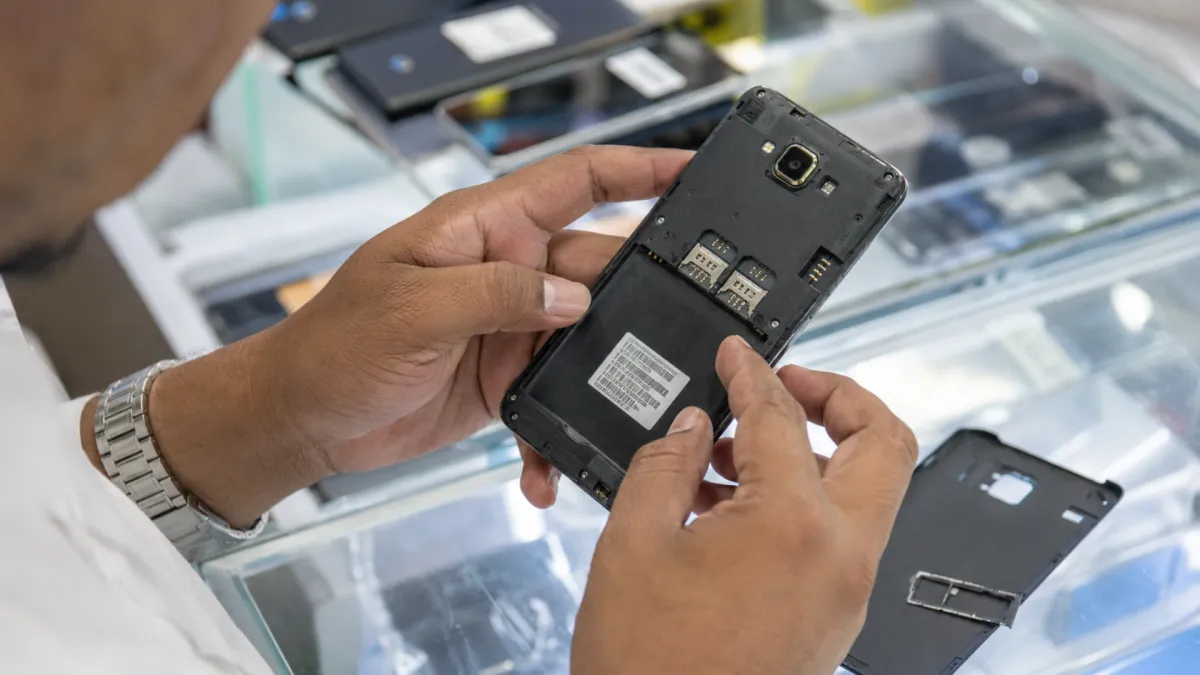
Sometimes it’s also printed on the device box, SIM tray, or under the battery on older models.
The key thing is not making it sound harder than it is. Most customers just need simple directions, not a technical lecture.
That’s where dealers can make the process feel easy.
IMEI Helps With BYOD More Than People Realize
Bring-your-own-device business is a big part of prepaid.
A lot of customers do not want a new phone. They want to keep what they already have and just switch service. That can be a great opportunity for dealers, but only if the process is handled right.
This is where IMEI becomes one of the first things that matters.
Before a customer switches, the device needs to be checked. Not guessed. Checked.
You need to know:
if it’s compatible
if it’s unlocked
if the device is clear for activation
if it makes sense to move forward
That creates a smoother experience and avoids wasted time.
The more BYOD traffic a store gets, the more important it becomes for the team to understand how to handle IMEI conversations well.
IMEI Does Not Give Away Personal Data
A lot of customers get nervous when you ask for their IMEI.
That’s understandable. People are more cautious now, and honestly, that’s not a bad thing.
But this is where a dealer should know how to explain it clearly.
An IMEI identifies the device. It is not the same thing as giving access to somebody’s photos, messages, or personal files. It helps identify the phone model and device status for network and activation purposes. That’s the key point.
Customers do not need a long explanation. They just need a clear one.
When the store can explain that with confidence, it builds trust and keeps the conversation moving.
Dealers Should Also Teach Customers to Protect It
Even though IMEI is not the same as personal data, it still should be handled carefully.
A good dealer should tell customers not to post it publicly, not to throw screenshots with it online, and not to enter it on random websites they don’t trust.
That’s just smart business.
Customers appreciate stores that actually educate them instead of rushing them.
And that kind of education helps separate real dealers from stores that are just trying to get through the line.
This Is One of Those Small Things That Makes a Store Better
I say this all the time: the stores that grow usually do the small things better.
Anybody can sell a plan.
Not everybody can explain the process clearly, answer the questions customers actually have, and make the whole experience feel easy.
That’s what makes people come back.
Understanding what an IMEI is may sound like a small thing, but in wireless, small things matter. They help you avoid mistakes, help customers feel more confident, and help your team look like they know what they’re doing.
That’s how a stronger store gets built.
An IMEI number is just a phone’s unique identity number, but in this business, it plays a big role. It helps confirm compatibility, helps with activations, helps verify used devices, and helps stores avoid unnecessary problems before they start.
And for dealers, that matters.
Because the more clearly you understand the basics, the better you can serve customers, the faster you can solve problems, and the more trust you build over time.
That’s the real value.
Not just knowing the definition, but knowing how to use it in the real world where dealers actually work.
Want to build with a team that helps dealers understand the business for real?
At UPD, we believe support should go beyond products and activations. We help dealers understand the details that protect profit, improve customer trust, and make stores run stronger.
Connect with Unlimited Prepay Distribution and grow with a team that stays involved.


