
Understand Phone Number Verification and Account Security
Understand Phone Number Verification and Account Security
A customer walks into your wireless store to activate a new phone.
Everything seems to be going smoothly until they need to verify their phone number.
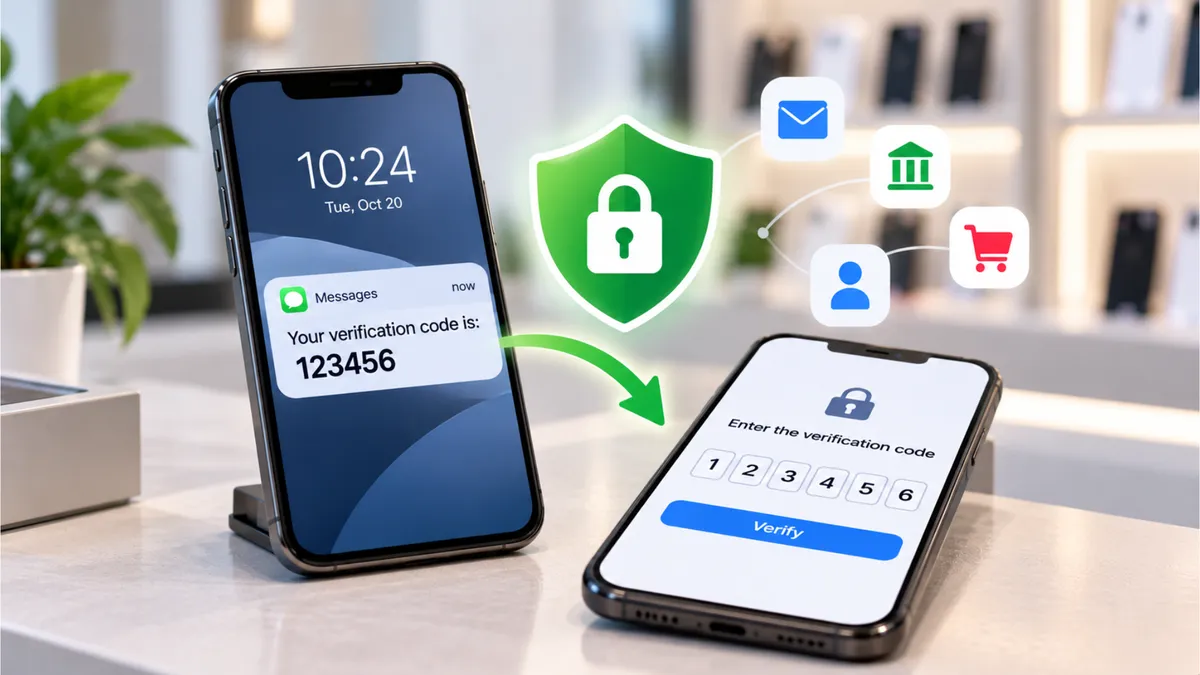
A six-digit code appears on their old device.
The customer asks your employee:
“Why do I need this code? Can't you just skip it?”
This is a common situation in wireless retail.
Customers use their phone numbers for more than calls and messages. Their numbers may also help them access banking apps, email accounts, social media, and other online services.
That makes phone-number security important.
For wireless dealers, understanding how verification works can help employees explain activation requirements, protect customer information, and avoid mistakes that could put accounts at risk.
Your Customer's Phone Number Is Connected to More Than Wireless Service
Think about how many online accounts ask for a phone number.
A customer may use their number to receive a login code from their bank.
They may need it to reset an email password.
They might receive appointment reminders, purchase confirmations, or security alerts through text messages.
Some services also use phone numbers as part of their account-recovery process.
That means losing control of a phone number can create problems beyond wireless service.
A customer who cannot receive verification messages may have difficulty accessing important accounts.
Someone whose number is taken over by a fraudster may face an even more serious security risk.
Wireless dealers should understand why customers need to protect their numbers, especially during SIM changes, activations, and number transfers.
Why Businesses Send Verification Codes
When customers log into an account, they may be asked to enter a code sent to their phone.
This is commonly called a one-time password, or OTP.
The code helps the service check whether the person attempting to access the account can receive messages at the registered number.
For example, a customer signing into a banking app may receive a six-digit text message.
They enter that code into the bank's official app to continue.
However, receiving a code does not automatically prove that the person is the rightful account owner.
Phone numbers can be compromised, messages can be intercepted in some circumstances, and customers can be tricked into sharing codes.
That is why many services use additional security measures.
Employees should never describe an SMS verification code as a guarantee that an account is secure.
What SIM-Based Number Verification Means
Some businesses are exploring ways to verify phone numbers through participating mobile networks.
This is sometimes called SIM-based number verification or network-based authentication.
Instead of always asking customers to manually copy a code from a text message, a supported service may check whether a claimed phone number is associated with the mobile connection being used.
Depending on the implementation, that check can happen in the background.
This may make certain verification experiences faster and reduce reliance on SMS codes.
However, the technology is not available everywhere.
It depends on the participating carrier, service provider, application, device conditions, and supported authentication process.
Customers should not assume that every app can verify their number automatically.
And dealers should not promise that a new verification method eliminates fraud.
The important point is that phone-number verification is evolving, while the need to protect customer accounts remains the same.
A SIM Card Does Not Automatically Prove Who Owns an Account
A SIM card or eSIM allows a compatible device to connect to a mobile network using an assigned subscription.
But possession of an active SIM does not necessarily prove the person using it is the legitimate account owner.
For example, a fraudster who successfully transfers someone else's number to another SIM may be able to receive certain messages intended for that person.
This is one reason carriers use identity-verification and account-security procedures.
Wireless employees should never treat possession of a device or SIM card as permission to change account ownership or bypass required checks.
The store must follow the authorized procedures for the specific carrier and transaction.
What Happens When a Customer Changes SIM Cards?
Imagine a customer purchases a new phone.
They want to move their existing number from their old device to the new one.
Depending on the carrier, device, and service, this may involve transferring an existing SIM, activating a replacement SIM, or setting up an eSIM.
The customer may need to complete identity verification before the change can proceed.
During the process, service on the old device may stop working once the number is successfully moved.
That can affect where the customer receives calls and text messages.
Employees should explain the expected process before making changes.
They should also remind customers that access to certain online accounts may depend on their ability to receive verification messages.
Never promise that all banking apps, messaging services, or account logins will transfer automatically.
Each service may have its own security requirements.
When a Customer Cannot Receive a Verification Code
A customer may visit your store because they are not receiving a code needed to access an account.
There are several possible explanations.
Their phone may have poor network connectivity.
The number registered with the online service may be incorrect.
The customer may have recently changed devices or SIMs.
The message may be delayed or filtered.
The online service may also be experiencing a problem.
Employees should first understand which service is sending the code.
Is it the wireless carrier?
A bank?
An email provider?
A social media platform?
This matters because the wireless store may not control the verification process.
If the issue involves a third-party account, the customer may need to contact that provider through its official recovery channels.
Do not attempt to bypass the provider's security checks.
Never Ask Customers to Share Private Verification Codes Unnecessarily
Verification codes are security credentials.
They should be handled carefully.
A wireless employee should never ask a customer to reveal a banking, email, or other unrelated account verification code.
For carrier transactions, employees must follow the carrier's authorized verification workflow.
If a process requires the customer to enter a code, let them enter it through the approved interface whenever possible.
Do not copy codes into personal notes, store them in messages, or share them with anyone outside the authorized process.
A simple explanation can help:
“That code is used to protect your account. Please enter it only where the official verification process asks for it.”
This helps customers understand that the code is not just another routine message.
Why SIM-Swap Fraud Matters to Wireless Dealers
SIM-swap fraud happens when someone wrongfully causes a victim's phone number to be transferred to a SIM or eSIM under the fraudster's control.
Once that happens, the fraudster may receive calls and text messages intended for the victim.
This can put accounts that rely on SMS verification at risk.
For example, a customer may suddenly lose cellular service.
Later, they discover that their phone number was moved without their permission.
Loss of service alone does not prove a SIM swap occurred.
It could also be caused by an outage, billing issue, device problem, or another service interruption.
But an unexpected loss of service combined with unauthorized account changes should be treated seriously.
Employees should follow the carrier's security and escalation procedures rather than attempting an unauthorized account change.
A Customer Suddenly Loses Service. What Should Your Team Do?
Imagine someone comes into your store and says:
“My phone stopped working this morning, and now I can't get into my bank account.”
Your employee should not immediately assume the device is broken.
Ask what happened.
Did the customer recently change phones?
Did they request a number transfer?
Have they received unexpected account notifications?
Are other customers in the area reporting an outage?
If there are signs of unauthorized account activity, direct the customer to the carrier's official fraud or account-security support process.
The customer should also contact any affected bank or online service through its official channels.
Employees should not promise to recover compromised accounts or reverse unauthorized transfers without following the required procedures.
The priority is getting the customer to the correct support resources.
Phone Number Transfers Require Careful Verification
Customers regularly switch wireless providers while keeping their existing numbers.
This process is called number porting.
It is a normal part of the wireless business.
But it also involves account information that must be handled securely.
Depending on the provider, a legitimate number transfer may require an account number, transfer PIN, or other authorization details.
Employees should explain which information is needed and how the customer can obtain it through official channels.
Do not guess account credentials.
Do not bypass security steps because the customer is in a hurry.
And do not initiate a transfer without the required authorization.
A faster activation is never worth putting a customer's number at risk.
Explain Security Without Making Customers Feel Confused
Not every customer understands terms such as SIM swap, authentication, or account verification.
Employees should use simple language.
Instead of saying:
“This process uses network authentication to validate your mobile identity.”
Try:
“The service needs to confirm that you're authorized to use this phone number before it completes the change.”
If a customer asks why they need a transfer PIN, explain that it helps protect the number from unauthorized transfers.
If they ask why a bank sends verification codes, explain that the bank is using an additional check before allowing account access.
Clear explanations can help customers understand why security procedures exist.
Help Customers Set Up Stronger Account Protection
When customers purchase a new phone, they may also need help understanding basic security settings.
Dealers can explain general security practices without accessing private accounts.
For example, customers can be encouraged to:
Use a strong screen lock.
Keep their phone's software updated.
Use unique passwords for important accounts.
Enable multifactor authentication where available.
Consider authenticator apps or passkeys when supported.
Use available carrier account protections, such as account PINs or number-transfer locks.
Avoid sharing verification codes with unexpected callers or messages.
Some authentication methods offer stronger protection against SIM-swap attacks than SMS codes.
However, no security method eliminates every risk.
Employees should follow store policies and let customers manage their own sensitive credentials.
Watch Out for Fake Verification Messages
Customers may receive text messages that appear to come from a bank, carrier, or familiar company.
Some messages claim that an account is locked.
Others warn that a payment failed or that immediate verification is required.
These messages may include links to fraudulent websites.
Employees should remind customers not to trust a message simply because it includes a recognizable company name.
If a message seems suspicious, customers should contact the organization through its official app, website, or a known phone number.
Do not use the contact details supplied in a suspicious message.
For example, if a customer receives an unexpected request to verify their banking information, the safest next step is to contact the bank directly through its official channels.
Know Which Security Problems Your Store Can Handle
Wireless stores can help customers understand certain device and service issues.
But they do not control every account connected to a phone number.
A dealer may be able to assist with an authorized activation or explain a carrier's official SIM replacement process.
However, an employee generally cannot reset a customer's bank account, recover an email password, or override another company's security requirements.
Employees should recognize these limits.
When an issue belongs to a carrier, bank, or online platform, refer the customer to the appropriate official support channel.
Avoid asking for passwords or trying to access unrelated customer accounts.
Helpful service also means knowing when the problem belongs to another provider.
Train Your Team to Recognize Account Security Warning Signs
Store managers should include account-security awareness in employee training.
Start with common situations.
1. A customer asks to transfer a number.
Make sure employees understand the authorized porting and verification requirements.
2. Someone requests a replacement SIM.
Follow the carrier's approved identity-verification procedure.
3. A customer cannot receive a login code.
Identify which service is sending the code and direct the customer to the appropriate support process.
4. A customer reports an unexpected loss of service.
Check ordinary service explanations while recognizing possible account-security concerns.
5. Someone asks an employee to skip verification.
Explain that required security steps cannot be bypassed.
6. A customer receives a suspicious text message.
Encourage them to verify the request through official channels.
Practicing these situations can help employees respond more consistently.
Better Security Awareness Can Build Customer Trust
Imagine two wireless stores.
At the first store, an employee becomes frustrated when a customer cannot complete verification.
They tell the customer to try random codes or skip required steps.
At the second store, the employee explains why the verification is necessary and helps the customer find the correct support process.
Which experience would make the customer feel more confident?
Wireless dealers handle services that customers depend on every day.
Phone numbers connect people to work, family, financial accounts, and important information.
That responsibility makes accurate communication and proper security procedures essential.
Customers should feel that their information is being handled carefully.
Make Secure Activations Part of Your Daily Store Process
Account security should not be something employees think about only after a problem occurs.
It should be part of normal store operations.
Before an activation or SIM change, employees should confirm that they are following the authorized procedure.
During the transaction, they should protect sensitive customer information.
Afterward, they should explain any important next steps.
If a transaction cannot be completed because verification fails, employees should follow the approved escalation process.
Do not create shortcuts that weaken account protection.
A consistent process helps the store serve customers while respecting the security requirements that protect their numbers.
A Better Customer Experience Starts With Protecting Their Number
Phone-number verification is becoming an important part of how businesses protect digital accounts.
Some services still rely on SMS codes.
Others support authenticator apps, passkeys, or network-based verification methods.
The technology may change, but the basic responsibility remains.
Customers need to understand why their numbers and verification credentials matter.
Wireless dealers can help by explaining security procedures, recognizing warning signs, and following authorized activation and account-management processes.
The goal is not to turn every employee into a cybersecurity expert.
It is to help customers make informed decisions while keeping sensitive account information protected.
Grow Your Wireless Business With UPD
Independent wireless dealers need knowledgeable employees, reliable service programs, and clear processes to help customers confidently use wireless services.
At Unlimited Prepay Distribution (UPD), we're focused on helping dealers explore available wireless products, understand service opportunities, and strengthen their businesses.
As phone-number verification and account-security practices evolve, make sure your team follows the current requirements of the carriers and programs you offer.
Want to explore more opportunities for your wireless store? Connect with Unlimited Prepay Distribution and learn how UPD can support your dealer business.


