
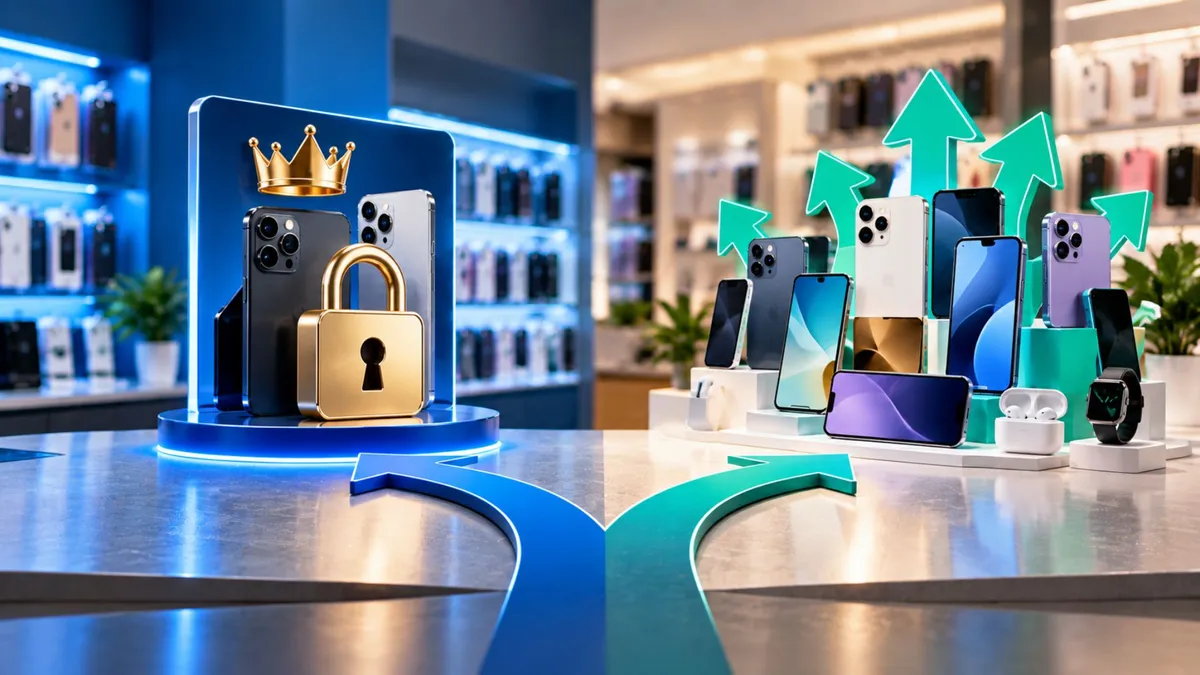
Should Wireless Dealers Go Exclusive or Stay Flexible?
Should Wireless Dealers Go Exclusive or Stay Flexible?
A dealer gets offered an exclusive wireless program.
The offer sounds strong.
Better support. Cleaner branding. More marketing help. Maybe better program terms.
But there is another side to the decision.
What happens when a customer walks in needing something that the exclusive program cannot offer?
That is why exclusivity should never be judged only by what sounds good on the first call.
Before signing anything, dealers need to understand what they gain, what they give up, and how the agreement affects the customers already walking through their doors.
The right answer depends on the store.
Exclusivity can change how your entire store operates.
It can affect:
What you are allowed to sell
How your store is branded
What customers you can serve
How your team is trained
Your marketing
Your device and accessory mix
Your long-term flexibility
The source article points out that exclusivity can sometimes improve program support and simplify the store, but it can also limit the ability to serve customers who need another option.
That means the decision should be based on the business.
Not emotion.
Not pressure.
Not a promise that sounds good during signup.
There are different types of exclusivity.
Brand Exclusivity
Your store agrees to focus on one wireless brand or program.
That may affect your:
Signs
Displays
Promotions
Product mix
Training
Activation options
Territory Protection
This is different.
Territory protection means the program may limit how close another authorized location can operate.
A dealer should never assume that being exclusive automatically gives them territory protection.
If something matters to your business, get it clearly written into the agreement.
Imagine a customer walks into your store.
They need wireless service, but the option your exclusive program offers does not fit their needs.
Maybe they need:
A different service setup
Another device option
Different features
A plan that better fits their household
If you are fully exclusive, you may have to say:
“We cannot help you with that.”
Now imagine that happens several times every week.
That lost traffic needs to be included when you decide whether exclusivity is actually helping your store.
On the other hand, if almost every customer walking into your location already wants the program you represent, exclusivity may make the store easier to operate.
That is why there is no single answer for every dealer.
What Dealers Need to Understand
Exclusivity Can Make the Store Simpler
One of the strongest benefits is focus.
Your team may only need to learn:
One plan lineup
One activation process
One promotion calendar
One main sales message
That can make employee training easier.
It can also reduce confusion at the counter.
A customer walking into a clearly branded store usually understands what the store represents immediately.
That clarity has value.
Strong Branding Can Help Customer Confidence
A clean, consistent store can feel more professional.
When signage, promotions, displays, and staff knowledge all match, the customer experience may feel easier to understand.
The source highlights this as one potential advantage of a focused single-brand environment.
But branding alone does not make the agreement good.
The business terms still need to make sense.
Flexibility Lets You Serve More Customer Types
A flexible store can offer customers more than one path.
If one solution does not fit, another might.
That can be valuable when your local market includes customers with very different:
Budgets
Device needs
Coverage needs
Service preferences
Family situations
The tradeoff is complexity.
More options mean more training, more systems, and more information for employees to understand.
The goal is not to carry everything.
It is to carry enough to serve your market well.
Do Not Put the Entire Business in One Basket Without Thinking
Programs change.
Policies change.
Promotions change.
Commission structures can change.
Customer demand can change.
If almost all of your business depends on one agreement, every change in that program affects your store more.
The original source identifies this concentration risk as one of the main disadvantages dealers should consider before going fully exclusive.
That does not mean exclusivity is wrong.
It means dealers need to understand the risk.
Read the Exit Terms
A good deal today may look different two years from now.
Before committing, understand:
Contract length
Renewal terms
Cancellation notice
Equipment ownership
Signage requirements
What happens when the relationship ends
Whether any continuing payments or benefits change
For important legal or contract questions, have a qualified attorney review the agreement.
Do not rely only on verbal explanations.
Dealer Tip
Before accepting exclusivity, ask one simple question:
“What am I gaining that I cannot get by staying flexible?”
Then put the answer in writing.
Better support?
Marketing?
Training?
Territory protection?
Operational help?
If the value is unclear, the decision is unclear.
What Customers Actually Care About
Customers usually do not care whether your agreement is exclusive.
They care about:
“Can you help me?”
“Does this fit my needs?”
“Is the price clear?”
“Can I trust your recommendation?”
Your business structure should make those questions easier to answer.
If exclusivity helps you serve your customers better, that matters.
If it constantly forces you to turn away good customers, that matters too.
How to Talk About It in the Store
If your store is focused on one main program, train employees to explain the value clearly.
Do not simply say:
“This is what we sell.”
Ask:
What are you using now?
What are you trying to improve?
How many lines do you need?
What matters most to you?
Is there a device you want to keep?
Then determine whether your available solution actually fits.
If it does not, be honest.
Good selling is not forcing every person into the same offer.
The Business Opportunity
A well-structured exclusive store may benefit from:
Cleaner operations
Easier training
Stronger store identity
More focused marketing
Clearer customer conversations
A flexible store may benefit from:
Serving more customer types
More ways to save a sale
Less dependence on one program
More options when the market changes
The source recommends comparing the upside of exclusivity against the business you may lose by turning customers away, rather than making the decision based only on promises.
That is the real lesson.
Run the business math.
What Dealers Should Do Next
1. Review your last 90 days of customer traffic
How many customers needed something you could not offer?
2. List exactly what exclusivity gives you
Separate real written benefits from verbal promises.
3. Review the risks
What happens if the program changes?
4. Understand the exit
Know the term, renewal, and cancellation requirements.
5. Choose based on your market
Build around what your customers actually need.
Exclusivity is not automatically a good move.
It is not automatically a bad move either.
It is a trade.
You may gain focus, stronger branding, easier training, and additional support.
You may give up flexibility and the ability to serve certain customers.
The right decision is the one that makes sense for your actual store.
Know your customers. Know the agreement.
Know what you are gaining. Know what you are giving up.
Then decide.
At Unlimited Prepay Distribution, we believe dealers should understand the business behind every opportunity before making a decision.
UPD helps dealers with practical guidance, wireless programs, and real support built around long-term store growth.
Connect with UPD and build with a team that understands the dealer side of the business.


