
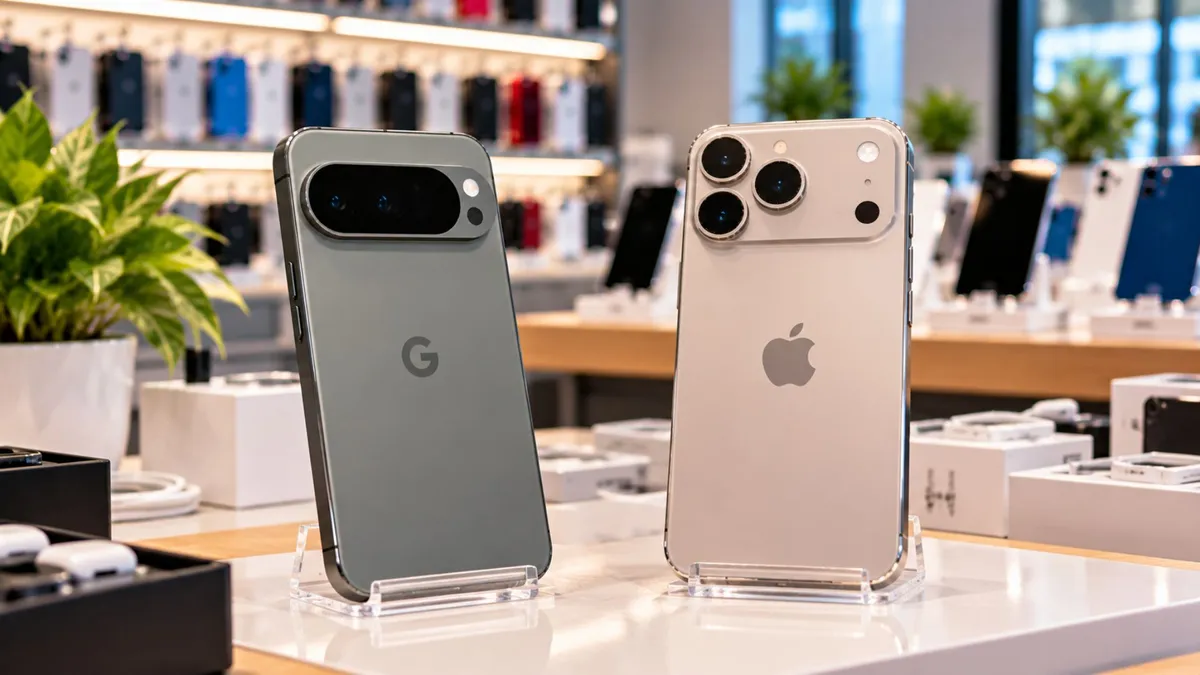
Pixel 11 Pro XL vs iPhone 17 Pro Max: What Wireless Dealers Should Know
Pixel 11 Pro XL vs iPhone 17 Pro Max: What Wireless Dealers Should Know
A customer walks into your store and asks:
“Which phone has the better camera?”
That sounds like a product question.
It is really a sales-discovery question.
Does the customer take pictures of their kids? Travel? Concerts? Products for their business? Social media videos? Night shots? Or do they simply want a camera that works without thinking about settings?
Two premium phones can both have excellent cameras and still fit two completely different customers.
That is why dealers should stop trying to declare one phone the winner.
Find out how the customer shoots. Then recommend the phone that fits.
Camera quality is one of the easiest premium-phone conversations to understand.
Customers may not know:
Sensor size
Aperture
Optical stabilization
Telephoto design
Image processing
But they understand:
“I take a lot of pictures of my kids.”
“I go to concerts.”
“I post videos every day.”
“I need good pictures at night.”
That gives the dealer a much better starting point.
The original source frames the Pixel 11 Pro XL versus iPhone 17 Pro Max comparison as a camera-driven upgrade opportunity rather than a simple Android-versus-iPhone argument.
That is the dealer lesson worth keeping.
Both phones are positioned as premium camera devices, but they approach zoom differently.
Google lists the Pixel 11 Pro XL with:
50MP wide camera
48MP ultrawide
48MP 5x telephoto
Pro Zoom up to 120x
Apple lists the iPhone 17 Pro Max with:
48MP main
48MP ultrawide
48MP 4x telephoto
An 8x optical-quality telephoto option
Digital zoom up to 40x
Dealers do not need to memorize every specification.
They need to understand what those differences may mean in real life.
A customer walks in and says:
“I want the best camera phone.”
Instead of immediately pointing to the most expensive device, ask:
“What do you take pictures of most?”
The customer says:
“My son plays soccer. I’m usually sitting pretty far away.”
Now the conversation changes.
Zoom becomes much more important than simply comparing megapixels.
Another customer might say:
“I barely zoom. I mostly record videos and send everything between my phone, laptop, and family.”
That is a different need.
The same “best camera” question can lead to two different recommendations.
That is why qualifying comes first.
What Dealers Need to Understand
Megapixels Do Not Tell the Whole Story
Customers often assume:
More megapixels = better camera.
It is not that simple.
Image quality can also depend on:
Sensor size
Lens
Stabilization
Software processing
Lighting
Zoom level
Focus performance
That means employees should avoid turning the conversation into a specification battle.
Use specs to support the recommendation.
Do not let them become the whole recommendation.
Zoom Matters for Certain Customers
The Pixel 11 Pro XL includes a 48MP 5x optical telephoto camera, while Apple’s iPhone 17 Pro Max uses a 48MP telephoto system with 4x optical and an additional 8x optical-quality option.
That makes zoom worth discussing with customers who shoot:
Sports
Concerts
Wildlife
Travel
School events
Subjects from a distance
Ask whether they actually use zoom before making it a major selling point.
Low-Light Photography Is a Real Customer Benefit
Customers rarely ask:
“How large is the telephoto sensor?”
They ask:
“Will the pictures look good at night?”
Google says the Pixel 11 Pro models received an upgraded telephoto sensor with greater light sensitivity, while Apple highlights improved low-light detail in the iPhone 17 Pro camera system.
Translate that into normal language:
“If you take a lot of photos indoors or at night, let’s compare how these cameras handle lower light.”
That makes the feature useful.
Ecosystem Still Matters
Camera performance should not be the only question.
A customer may already rely heavily on:
iMessage
FaceTime
AirPods
Mac
Google Photos
Android apps
Google services
A device can have a great camera and still be the wrong choice if changing ecosystems creates unnecessary frustration.
The best dealer recommendation looks at the whole customer.
Not just one feature.
Let the Customer See the Difference
If you have display units, use them.
Take the same photo with both phones.
Try:
Normal photo
Zoom
Portrait
Low light
Front camera
Then let the customer look.
That is much stronger than telling them:
“Trust me, this camera is better.”
Dealer Tip
Before recommending a premium camera phone, ask these three questions:
1. What do you take pictures of most?
2. Do you use zoom often?
3. Do you care more about photos, video, or both?
Three simple questions can save ten minutes of talking about specifications the customer does not care about.
What Customers Actually Care About
Customers are thinking:
“Will my kids look clear when they are far away?”
“Will night photos look good?”
“Will my videos look good on social media?”
“Is the camera easy to use?”
“Will my photos transfer easily?”
That is how your team should sell the camera.
Turn technology into real situations.
How to Talk About It in the Store
Ask:
“Do you mostly photograph people, travel, sports, or everyday moments?”
“Do you zoom in a lot?”
“Do you take many pictures indoors or at night?”
“Do you shoot more photos or videos?”
“What phone are you using now?”
“Are there Apple or Android devices you want this phone to work closely with?”
Then say:
“Based on how you use the camera, this is the option I would show you first.”
Now you are recommending it.
Not guessing.
The Business Opportunity
A camera-focused upgrade can naturally uncover more customer needs.
Someone buying a premium camera phone may also need:
Protective case
Screen protection
Camera lens protection
Charging accessories
More storage
Cloud backup setup
Data transfer
Tripod or mobile creator accessories
The source specifically connects camera-driven upgrades with protection, backup, accessories, and setup services.
But the same rule applies:
Do not throw every accessory onto the counter.
Connect the add-on to something the customer told you.
If they take thousands of photos, backup matters.
If they shoot sports from the sidelines, protection and battery life may matter.
If they create content, accessories may matter.
Relevant upsells feel helpful.
What Dealers Should Do Next
1. Stop asking, “Which phone do you want?”
Ask how they actually use the camera.
2. Train staff on customer benefits, not just specifications
Know what zoom, low-light capability, stabilization, and storage mean in everyday life.
3. Demonstrate whenever possible
Let customers compare real photos.
4. Include ecosystem in the recommendation
The camera is important, but it is not the entire phone experience.
5. Connect accessories to actual usage
Recommend what helps the customer get more from the device.
The Pixel 11 Pro XL and iPhone 17 Pro Max both give dealers a strong premium-camera conversation.
But your job is not to win an Android-versus-iPhone argument.
Your job is to answer:
Which device makes more sense for this customer?
Ask what they photograph.
Ask about zoom.
Ask about video.
Ask about their existing devices.
Then make the recommendation.
The best camera phone is the one that fits how the customer actually uses it.
At Unlimited Prepay Distribution, we believe stronger dealers do more than put phones on shelves.
They understand the customer, explain the value clearly, and help people choose the right wireless solution.
Connect with UPD and build your wireless business with a team that understands how better customer conversations create better opportunities.


