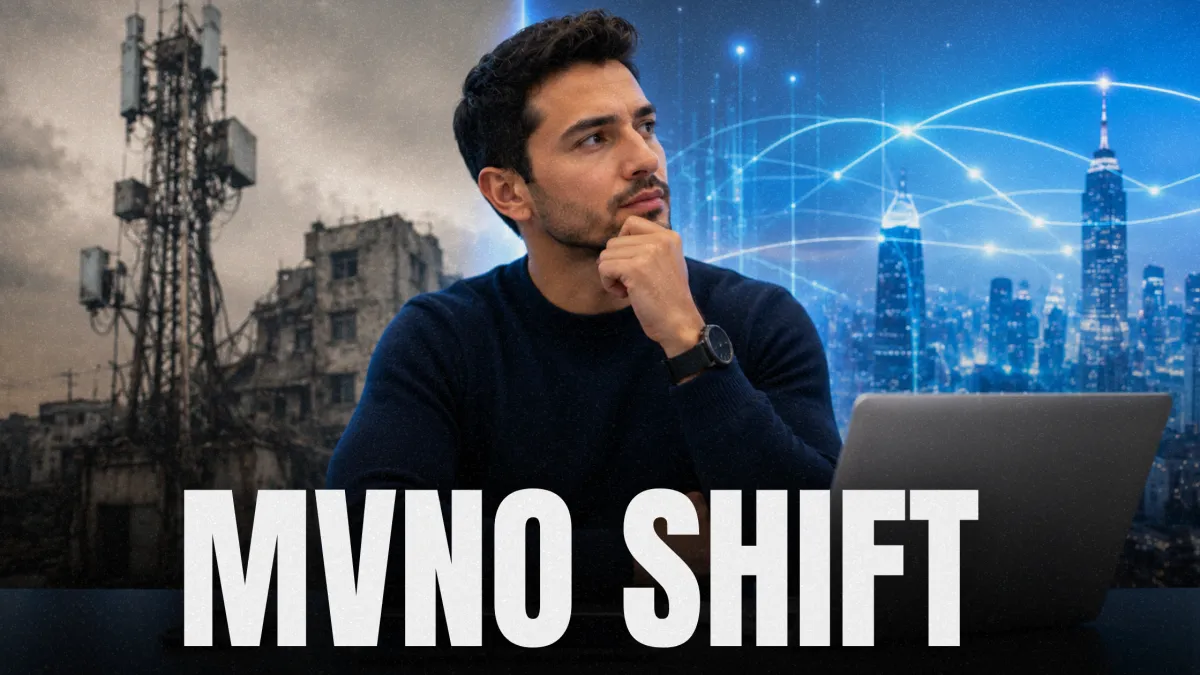
Why the Old MVNO Model Is Breaking, And What the Next One Needs to Look Like
Why the Old MVNO Model Is Breaking, And What the Next One Needs to Look Like
A lot of people in wireless still think the old MVNO playbook has room left in it.
More low-cost plans. More gigabytes. More fine print. More noise around “value.”
But if you’ve been around this business long enough, you can see what’s happening.
That model is getting weaker.
When everybody is chasing the same customer with the same message, the same pricing game, and the same recycled offer structure, it stops being a real strategy. It turns into a race to the bottom. Lower margins. Less loyalty. More pressure. Less room to build something stable.
That’s the real issue.
The old MVNO model was built for a market where offering cheaper service was enough to get attention. Today, that’s not enough. Customers are more digital, more selective, and less patient. They don’t want complexity. They don’t want hidden terms. They don’t want to feel like they need a manual just to understand what they’re buying.
And the younger the audience gets, the more obvious that becomes.
If you’re targeting digital-native customers, especially younger users, then the old MVNO structure starts looking even more outdated. A big part of the market barely uses voice the way previous generations did. Traditional customer service channels don’t carry the same weight. Long explanations, overloaded plan structures, and bloated logic just create friction.
That’s why this conversation matters.
The next real shift in wireless is not just about selling cheaper service. It’s about building a model that fits the way people actually live, communicate, and buy now.
The Old MVNO Model Has a Real Problem
For years, a lot of MVNOs have competed in the most predictable way possible.
More data for less money.
That sounds good until everybody does it.
Once the entire category starts pushing the same angle, the only thing left to compete on is price. And price-only competition is usually where businesses start losing control. Margins shrink. Differentiation disappears. Support gets weaker. The customer becomes less loyal because they were never really connected to the brand in the first place.
They were just reacting to the cheapest option.
That is not a durable business.
If your whole model depends on being slightly cheaper than the next guy, then eventually somebody comes in cheaper than you. And now your position is weak.
That’s the trap a lot of MVNOs fell into.
They built around discounts instead of identity. Around volume instead of loyalty. Around price instead of experience.
That works for a while. Then it starts cracking.
Customers Are Changing Faster Than Many Operators Are
One of the biggest mistakes in telecom is building offers around old habits.
A lot of operators still package services like the customer behaves the same way they did years ago. Heavy voice assumptions. Standard SMS logic. Offer structures filled with terms the customer doesn’t care about. Usage bundles built more around wholesale mechanics than real-life behavior.
The customer doesn’t think that way.
Especially younger customers.
Younger users live digitally. They spend through apps. They communicate through platforms, communities, group chats, DMs, and content ecosystems. They want fast clarity. They want flexibility. They want to feel in control. They don’t want to call a support line every time something feels off.
That means the model has to evolve.
You cannot keep serving a digital-first audience with a structure built around telecom habits that are fading.
The market changed. A lot of operators didn’t.
Simplicity Is No Longer a Bonus. It’s the Product
One of the smartest ideas in this newer MVNO thinking is radical simplicity.
No buried terms. No overloaded plan logic. No confusing “unlimited” language with hidden usage conditions nobody reads until there’s a problem.
Customers are tired of that.
They want to know what they’re paying for, what they’re getting, and what happens next. That’s it.
The more complicated the product feels, the less trust it creates.
And trust matters more than people think in wireless.
A lot of operators lose the customer before the service even starts because the offer already feels like a trap. Too much fine print. Too many exceptions. Too much language designed to protect the operator instead of respect the user.
That’s old thinking.
The future belongs to operators who make the experience easier to understand, easier to manage, and easier to trust.
Real-Time Transparency Needs to Be the Standard
If the old model is built around bundles and vague protections, the next model should be built around visibility.
Customers want to know what they are using and what they are spending in real time. Not after the problem. Not after the surprise. Not after the frustration.
That level of transparency changes the relationship.
When a user feels like they can see what’s happening clearly, the service feels fairer. It feels more modern. It feels like the operator is not trying to outsmart them.
That matters.
In a category where a lot of trust has already been lost, transparency becomes a competitive advantage.
Simple pricing, real-time usage visibility, and smart alerts are not just product features. They are trust features.
And the operators who understand that are going to build stronger customer relationships than the ones still hiding behind complicated plan language.
Community Is a Bigger Opportunity Than Most Operators Realize
This is where things get interesting.
A lot of telecom brands still think in terms of customers and subscribers. That’s fine on paper, but it misses something bigger.
People do not just buy services. They buy identity, belonging, relevance, and ease. That is why community matters.
A strong MVNO model in the future is not just about having users. It is about building around a real audience that already shares behavior, interests, values, or digital habits.
That changes everything.
A community-driven model is stronger because it gives the brand a reason to exist beyond pricing. It creates a clearer message, sharper positioning, and a more natural path to loyalty. It also creates a more organic growth engine because people inside a real community influence each other more than traditional telecom marketing ever will.
That is a much smarter foundation than trying to be one more generic operator in a crowded market.
Community is not fluff. It is a strategy.
A Digital-First Model Has to Be Fully Digital for Real
A lot of companies say they are digital-first when really they just moved part of the experience online.
That’s not the same thing.
A true digital-first operator needs to reduce friction from beginning to end. Onboarding. Support. usage tracking. plan changes. account control. communication. Everything.
If the customer still has to fight the process, it is not truly digital.
This is especially important for younger audiences. They are not comparing your service only to other operators. They are comparing your experience to the best digital products they use every day. Fast apps. clear interfaces. instant updates. low friction. high control.
That is the standard now.
If a telecom brand still feels slow, heavy, or outdated, customers notice immediately.
The future MVNO model has to be built around speed, clarity, and self-service. Not because it sounds modern, but because that is what the customer expects.
The Next Winning Model Will Be Built Around Relevance, Not Just Reach
There was a time when the main question was how many people you could reach.
Now the better question is how relevant you are to the people you want.
That is a different mindset.
A focused operator with a clear audience, a strong community angle, simple pricing, and a digital-first experience can build something more durable than a generic operator trying to appeal to everybody.
That is where the opportunity is.
Not bigger just for the sake of being bigger.
Sharper. More relevant. More trusted. More aligned with how a real audience lives.
That is how newer MVNO models can win without falling into the same old pricing trap.
What This Means for Wireless Operators and Dealer-Focused Businesses
Even if you are not building a full MVNO from scratch, there is still a lesson here.
Wireless businesses that want to grow need to pay attention to where the market is moving. Customers want simplicity. They want honesty. They want digital convenience. They want brands that feel close to how they actually live and buy.
And if you are on the dealer side of the business, this matters too.
Because every shift in wireless eventually shows up at the store level. The products that win, the offers that convert, the support customers expect, and the way trust gets built all start changing together.
That is why businesses in wireless cannot afford to keep thinking with an old model while the customer is already living in a new one.
The operators and partners who adjust faster are the ones who keep their edge.
The ones who don’t usually spend years trying to protect a model that is already getting weaker.
Want to build in wireless with a model that fits where the market is going?
Whether you’re growing a wireless business, looking at new dealer opportunities, or trying to understand where prepaid and telecom are headed next, UPD believes the future belongs to businesses built on trust, simplicity, support, and real-world relevance.
Connect with Unlimited Prepay Distribution and build with people who understand where wireless is really going.


