
How Wireless Dealers Can Handle Phone Trade-Ins Without Customer Disputes
How Wireless Dealers Can Handle Phone Trade-Ins Without Customer Disputes
A customer walks into your store and says:
“This phone is basically new.”
You inspect it and notice scratches on the screen, wear around the frame, and marks near the camera.
Now the customer expects one trade-in value, but your store sees another.
That is where problems start.
Trade-in disputes are often not about the phone model. They are about condition, expectations, and documentation.
Dealers can make this process much easier by using the same grading steps every time, explaining the condition clearly, and documenting what both sides see before the customer leaves.
Trade-ins can create opportunity.
But they can also create frustration if the process feels unclear.
A customer may believe:
“The phone works, so it should get the highest value.”
But trade-in conditions can also depend on things like:
Scratches
Cracks
Frame damage
Camera condition
Device locks
IMEI status
Functional issues
The source points out that customers often focus only on whether the phone works while overlooking cosmetic wear and other issues that can affect grading.
For dealers, the lesson is simple:
Set expectations before talking about final value.
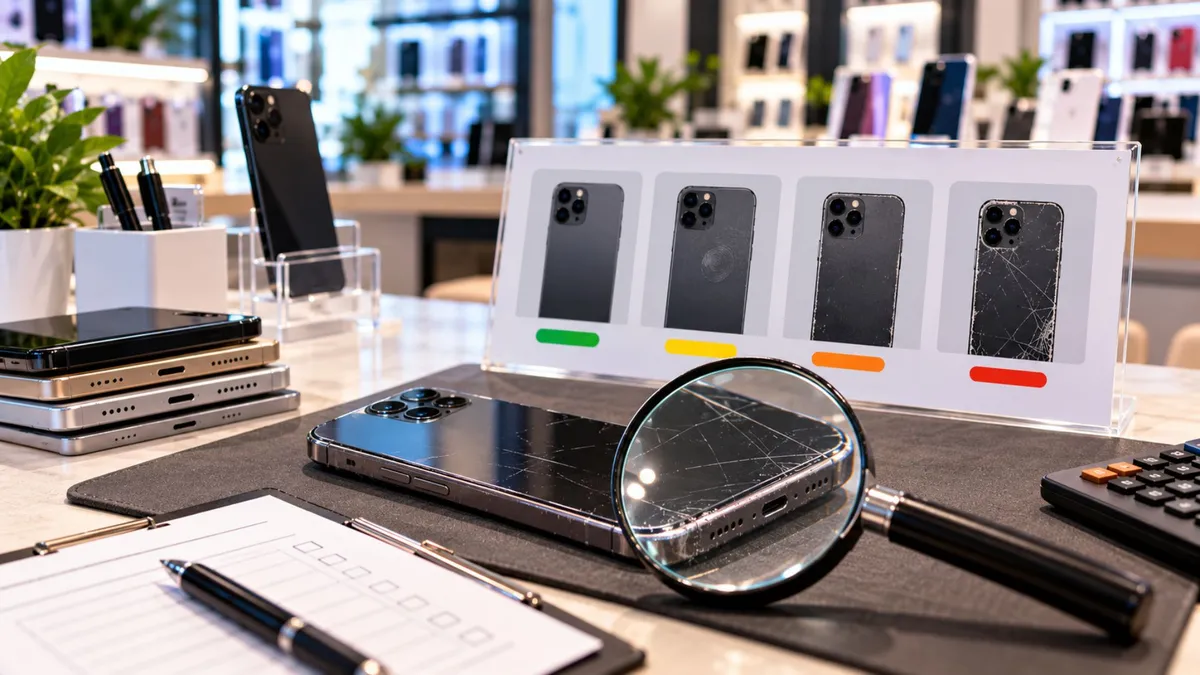
Trade-in grading is a way to describe the condition of a device.
A common approach uses grades like:
Grade A — Excellent or near-mint condition
Grade B — Good condition with normal wear
Grade C — Heavier visible wear
But there is an important rule:
Not every buyer uses the exact same grading standards.
The source makes that clear before outlining its general A/B/C examples.
That means your team should always follow the standards of the trade-in or buying program you are actually using.
Do not promise a grade based only on memory.
A customer brings in a phone and says:
“This should be Grade A. I barely used it.”
Your employee looks at the device under normal lighting and it seems clean.
Then they check it under brighter light.
Now they can see:
Several screen scratches
Small nicks on the corners
Wear around the frame
The customer may still feel the phone is in great condition.
That is why the best approach is not to argue.
Show them.
Explain:
“The phone works well, but the trade-in grade also looks at physical condition. Let’s go through it together so you can see what we are seeing.”
That keeps the conversation based on evidence.
Working Does Not Automatically Mean Top Grade
A phone can turn on and function normally but still have visible cosmetic wear.
The source explains that Grade A examples are usually very clean with no cracks, deep scratches, or dents, while Grade B may include normal scratches and scuffs. Grade C generally shows much heavier wear.
The important lesson is not the exact letter.
It is consistent.
Your team should inspect every phone using the same process.
Some Problems Can Affect More Than the Grade
Not every problem is just cosmetic.
Issues such as:
Cracked glass
Display damage
Water damage
Frame bending
Device locks
IMEI problems
may reduce the value heavily or make the device ineligible under some programs.
The source highlights these as common issues dealers should check before completing a trade-in.
Again, the exact outcome depends on the specific buyer or trade-in program.
Inspect Under Good Lighting
Small marks are easy to miss.
Do not grade the phone in a dark corner of the store.
Check:
Screen
Back
Frame
Corners
Camera lenses
Ports
Buttons
The source recommends checking the device carefully and documenting the condition with notes and photos before the customer leaves.
Document the Condition
This is one of the most important steps.
If the customer disagrees later, your team should not have to rely on memory.
Take photos.
Write notes.
Record the grade or condition.
Make sure the customer understands what was documented.
That protects both sides.
Dealer Tip
Do not tell the customer:
“Your phone is only Grade B.”
Show them why.
Point out the scratches.
Show the frame wear.
Explain what the grading standard looks at.
Customers may not like the answer, but they are more likely to accept it when the process feels clear.
What Customers Actually Care About
Customers usually care about three things:
“How much is my phone worth?”
“Why is it worth that amount?”
“Are you being fair with me?”
That last question is the big one.
If your process feels random, customers may feel like the store is changing the value.
If your process is consistent and visible, the conversation becomes easier.
The customer may still disagree, but they can understand how you reached the decision.
How to Talk About It in the Store
Keep the explanation simple.
You can say:
“Trade-in value is based on more than whether the phone works. Let’s check the condition together.”
Then walk through:
“We’ll look at the screen, frame, back, camera, buttons, locks, and device status.”
If there is visible wear:
“This wear can affect the condition grade. I want to show you exactly what we are seeing before we finalize anything.”
If there is a device restriction:
“The condition looks fine, but we also need to confirm the phone is eligible and free of account or device restrictions.”
The source recommends the same basic idea: explain grading clearly and document the condition before the customer leaves.
The Business Opportunity
A good trade-in process can do more than reduce disputes.
It can create a smoother upgrade conversation.
A customer trading in a phone may also need:
A replacement device
A new activation
A device upgrade
A case
Screen protection
A charger
Data transfer help
The opportunity is not to pressure the customer.
It is to make the full process easier.
If customers feel the trade-in was handled fairly, they are more likely to trust the rest of the transaction.
What Dealers Should Do Next
1. Use one grading process
Every employee should check devices the same way.
2. Use strong lighting
Make cosmetic wear easy to see.
3. Check more than appearance
Review locks, IMEI status, buttons, ports, and basic function when required by your program.
4. Take photos and notes
Document the condition before the trade-in is completed.
5. Explain the result
Do not just give a grade. Show the customer how you reached it.
Trade-in disputes usually get worse when the process is unclear.
Customers may describe their phone as “like new.”
Your store may see normal wear.
Neither side should have to argue from memory.
Inspect the phone.
Show the condition.
Follow the same process every time.
Document what you see.
Then explain the result clearly.
Consistency creates clarity. Clarity builds trust.
At Unlimited Prepay Distribution, we believe stronger wireless stores are built with better systems, better customer conversations, and real dealer support.
UPD helps dealers grow with practical guidance and industry experience built around what happens in the store every day.
Connect with UPD and build your wireless business with a team that understands the dealer side.


