
Build More Consistent Revenue Beyond One-Time Sales
Build More Consistent Revenue Beyond One-Time Sales
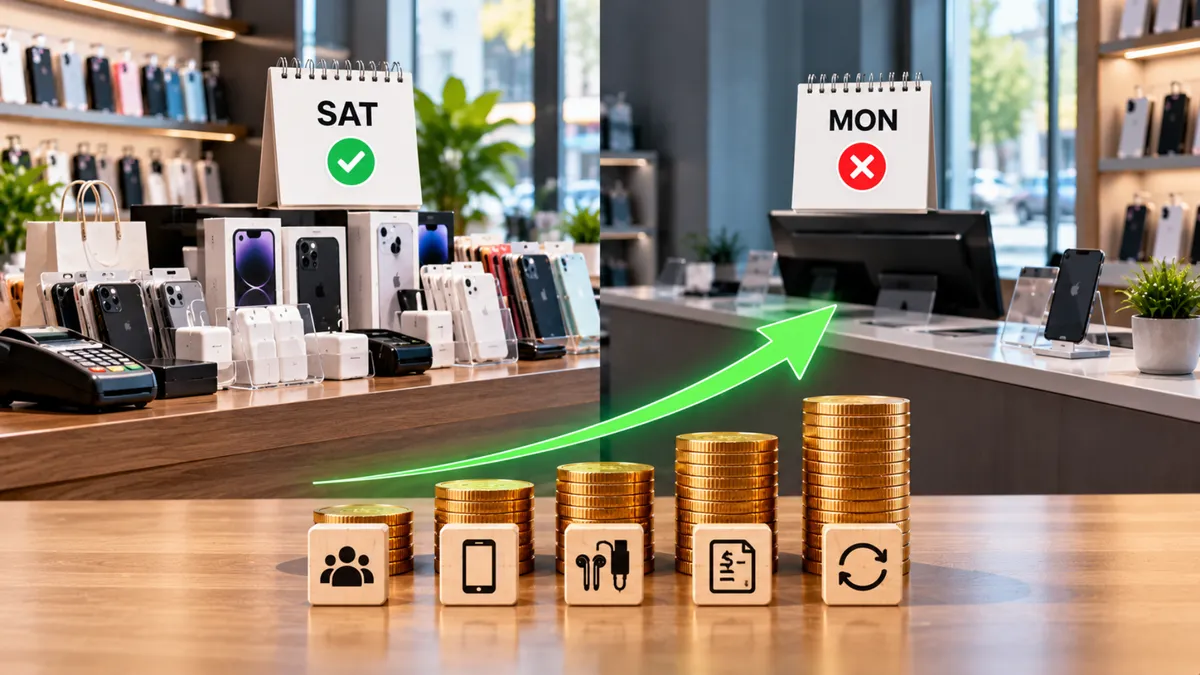
Imagine your wireless store has a busy Saturday.
Several customers activate new lines.
A few people purchase phones.
Your employees sell cases, chargers, and screen protectors.
By closing time, the team feels good about the day's sales.
But Monday is different.
Only a few customers walk in.
There are no major activations.
Phone sales are slow.
Now the owner is wondering how to keep the business moving.
This is a familiar challenge for independent wireless dealers.
New activations and device sales are important. But when a store depends almost entirely on new customers, daily performance can become unpredictable.
A stronger business pays attention to more than the first transaction.
It also looks at repeat customers, ongoing service needs, additional products, and the actual profit each activity creates.
New Activations Matter, but They Are Not the Whole Business
Every wireless dealer wants new customers.
New activations can introduce people to the store and create opportunities for future business.
But attracting new customers takes effort.
Your team may spend time answering questions, explaining coverage, comparing plans, and helping people choose devices.
Some customers activate immediately.
Others leave without purchasing.
If the store focuses only on new activations, it may overlook people who have already done business with it.
Think about a customer who purchased a prepaid phone six months ago.
They already know where your store is.
They may remember the employee who helped them.
And they may return when they need an accessory, a replacement device, or assistance with their service.
That existing relationship can be valuable.
The opportunity is to give customers a reason to return when they have another legitimate need.
Repeat Sales and Recurring Revenue Are Not the Same Thing
These two terms are often confused.
A repeat sale happens when a customer returns and makes another purchase.
For example, someone buys a charging cable in January and returns for a screen protector in March.
Those are separate transactions.
Recurring revenue generally refers to revenue earned through an ongoing arrangement, such as a subscription or service contract.
A wireless dealer may also receive ongoing compensation under certain authorized programs.
But that depends on the actual agreement.
A customer returning every month to make a prepaid payment does not automatically mean the store receives recurring revenue or residual commissions.
The dealer's compensation may depend on the transaction type, provider, and program terms.
Store owners should understand these differences when reviewing business performance.
A Returning Customer Can Create More Than One Opportunity
Imagine a customer visits your store to refill their prepaid service.
While completing the transaction, they mention that their phone battery does not last as long as it used to.
Your employee has an opportunity to ask a useful question.
“Is the battery draining quickly, or is the phone having trouble charging?”
The customer explains that the charging cable works only when it is held at a certain angle.
That may lead to a discussion about the cable, charging port, or device condition.
The employee should not immediately assume the customer needs a new phone.
Instead, they can help identify the appropriate next step.
The customer may need a compatible replacement cable.
They may need a technician to inspect the device.
Or they may eventually decide that an upgrade makes sense.
The additional opportunity comes from listening to the customer's needs, not pushing an unrelated product.
Keep Track of Why Customers Return
Wireless dealers can learn a lot from repeat visits.
Are customers returning to purchase accessories?
Do they need help transferring information to new phones?
Are they coming back because they have questions about their plans?
Do they regularly ask about home internet or additional family lines?
These patterns can help store owners understand demand.
For example, if customers frequently ask for charging accessories, the store may want to review its accessory selection.
If many people ask about family plans, employees may need better training on available multi-line options.
If customers repeatedly struggle with the same activation process, the store may need to improve its instructions.
The goal is to recognize patterns that can guide better decisions.
Not Every Sale Produces the Same Profit
A store can be busy without being highly profitable.
Imagine your team sells several phones in one day.
The total sales amount looks impressive.
But after accounting for the cost of the devices and other applicable expenses, the gross profit may be smaller than expected.
Now compare that with accessories.
A lower-priced accessory may have a different gross margin.
The store owner needs to understand both the revenue and the cost of each product category.
The same principle applies to activations, refills, and other transactions.
A large transaction amount does not necessarily represent dealer earnings.
Compensation may also be subject to program conditions, adjustments, or reversals.
Owners should review the actual economics of each activity instead of assuming that more transactions always mean more profit.
Build a Clear Picture of Where Your Money Comes From
Start by reviewing your store's sales and compensation records.
Separate the major categories.
For example:
New activations
Device sales
Accessories
Prepaid refills or top-ups
Repair services, if offered
Authorized service-related compensation
Other approved products or programs
Then look at the gross profit associated with each category.
If you receive residual or other ongoing compensation, record it separately from one-time transaction earnings.
This helps prevent confusion.
For example, a $50 customer refill is not necessarily $50 in dealer revenue.
The store may receive only the compensation specified by its program.
Accurate records help owners understand which activities contribute to the business.
Customer Retention Starts With a Good First Experience
Before thinking about repeat sales, look at what happens during the first visit.
Was the customer greeted?
Did the employee explain the plan accurately?
Were the device and service checked for compatibility?
Did the customer understand what they were paying?
Were the activation and setup completed correctly?
A customer who leaves confused may hesitate to return.
A customer who receives clear, helpful service has a reason to remember the store.
That does not guarantee loyalty.
But it gives the business a better foundation for future interactions.
Retention begins with doing the first transaction properly.
Small Customer Service Habits Can Encourage Return Visits
You do not need an elaborate loyalty program to improve the customer experience.
Start with practical habits.
Explain where customers can find their account information.
Tell them how to contact the appropriate support channel if they experience a service issue.
Make sure they understand important payment or renewal dates.
Provide receipts and relevant transaction information.
If your store offers accessories or other services, let customers know what is available without pressuring them.
For example, after helping someone activate a new phone, an employee might say:
“If you ever need a compatible charger or help understanding your device settings, you're welcome to stop by.”
This is a simple invitation.
It does not promise free technical support or a future discount.
It lets the customer know the store may be able to help with another need.
Follow-Ups Should Be Helpful, Not Annoying
Some stores collect customer contact information but rarely use it effectively.
Others send too many promotional messages.
Neither approach necessarily builds a good relationship.
Customer communication should have a clear purpose.
For example, if someone asked about a phone that was unavailable, the store may be able to contact them when it returns to stock—provided the customer agreed to receive that communication.
If a customer expressed interest in an eligible service, an appropriate follow-up may help them review their options.
But messages should follow applicable consent, privacy, and marketing rules.
Do not assume that completing a transaction gives the store unlimited permission to send promotions.
Respect customer preferences and make it easy to stop receiving marketing messages when required.
Accessories Can Support Revenue Between Device Purchases
Customers do not purchase new phones every week.
But they may need accessories between upgrades.
Charging cables wear out.
Customers lose adapters.
Phone cases become damaged.
Someone purchasing a new device may also need a compatible charger or screen protector.
These are ordinary customer needs.
Dealers can support them by keeping relevant accessories available and training employees to recommend compatible products.
The important word is compatible.
A charger should meet the device's requirements.
A case should fit the exact model.
Employees should explain which items are included with a phone and which are optional purchases.
A helpful recommendation can support both the customer and the store.
Repair Needs Can Bring Customers Back
Some wireless stores also provide phone repair services.
Others work with qualified repair providers.
Repair-related customer needs can create additional business opportunities.
For example, someone may return because their screen is cracked.
Another customer may have a charging problem.
A third may need help understanding whether a device is worth repairing.
If your store offers repairs, make sure the work is performed by appropriately trained personnel using safe procedures.
If it does not, avoid attempting repairs outside your team's capabilities.
A reliable referral may be better than an unsupported promise.
Repair services should also be evaluated based on actual costs, labor, parts, warranties, and customer demand.
Not every repair is profitable or appropriate.
Business Customers May Have Ongoing Wireless Needs
A small business may need more than one phone.
For example, a cleaning company may have several employees who need reliable mobile service.
A delivery business may need phones or mobile connectivity for drivers.
A local contractor may need additional lines as the team grows.
These customers can have changing needs over time.
But dealers should not assume that every small business needs an expensive package.
Start by asking how the business uses its devices.
How many people need service?
Where do they work?
Do they need mobile data, hotspots, or additional devices?
What budget are they managing?
Then review the services actually available through your authorized programs.
A business customer relationship may create repeat opportunities, but compensation and service availability depend on the provider and agreement.
Know Whether Your Programs Offer Ongoing Compensation
Some wireless dealer programs may include residual commissions or other forms of ongoing compensation.
Others may focus on one-time activations, transaction-based earnings, or different incentive structures.
These arrangements are not interchangeable.
Before joining a program, ask how compensation is calculated.
Is payment based on activation?
Does it depend on the customer's continued service?
Are there qualification requirements?
Can earnings be adjusted or reversed?
What happens if the customer changes plans or cancels?
What happens to compensation if the dealer relationship ends?
These questions should be answered through current written program terms.
Do not build your business forecast around compensation that has not been confirmed.
A Higher Commission Does Not Always Mean a Better Partnership
Imagine two distributor programs.
One advertises a higher activation payout.
The other offers a different compensation structure but provides useful reporting and responsive support.
Which one is better?
There is no universal answer.
The owner needs to compare the actual economics and operational requirements.
For example, a high payout may be less attractive if the program has restrictions that do not fit the store's customer base.
A lower payout may also be unattractive if the business cannot generate enough profitable transactions.
Look beyond the headline number.
Review product availability, eligible services, support processes, reporting, payment timing, and applicable program conditions.
Choose based on the needs of your business.
Clear Reports Help You Make Better Decisions
A wireless store owner should not have to guess how the business is performing.
Good reporting helps answer practical questions.
How many activations were completed?
Which products sold?
What compensation was earned?
Were there adjustments or chargebacks?
Which categories generated gross profit?
Are customers returning?
Some distributor or carrier portals provide reporting tools.
Others may require owners to reconcile information from multiple systems.
Whatever tools are available, the store needs a reliable process.
Review records regularly and investigate unexplained differences.
A dashboard is useful only when the underlying information is accurate.
Do Not Confuse Sales Volume With Business Stability
A store may generate strong revenue during a promotional period.
But that does not automatically mean the business is stable.
If most sales depend on one promotion or one provider, changes to that program could affect performance.
Similarly, a store with many returning customers still needs to understand its margins and operating expenses.
Business stability involves several factors.
Customer demand.
Product availability.
Cash flow.
Operating costs.
Reliable staff.
Appropriate supplier relationships.
And the ability to adapt when customer needs change.
Repeat business can support a store, but it should be evaluated alongside the full financial picture.
Build a Simple Monthly Revenue Review
Store owners can begin with a basic monthly review.
At the end of each month, compare the current results with the previous month.
Look at total sales and gross profit.
Review activations, devices, accessories, and other transaction categories.
Record any ongoing compensation separately.
Check returns, adjustments, and chargebacks.
Look at inventory that has not moved.
Then identify one area that deserves attention.
For example, if accessory sales are low despite strong phone sales, review whether employees are explaining compatible options.
If customers frequently return with setup questions, consider improving the original setup process.
If earnings reports contain unexplained adjustments, investigate the relevant program terms.
The purpose is to make better decisions using real information.
Train Employees to Recognize Customer Needs
Employees should understand that a customer visit is not only about the immediate transaction.
Someone purchasing a prepaid refill may also have a device problem.
A customer buying a new phone may need help choosing compatible accessories.
A person asking about one line may be considering service for a family member.
These opportunities should come from genuine needs.
Train employees to ask useful questions.
“What do you mainly use your phone for?”
“Are you having any problems with your current device?”
“Do you need service for anyone else?”
“Would you like to see the compatible accessories available for this model?”
Employees should listen to the answers rather than deliver the same sales pitch to everyone.
Your Existing Customers Can Help You Understand What to Offer Next
Imagine several customers ask your store about home internet.
That does not automatically mean you should begin selling a new internet service.
But it may indicate demand worth investigating.
Check whether suitable authorized programs are available.
Review service coverage and eligibility requirements.
Understand the equipment, support, and compensation structure.
Then evaluate whether the opportunity fits your store.
The same approach applies to accessories, tablets, business lines, and other wireless-related products.
Customer questions can help identify opportunities.
But every new category should be evaluated based on actual demand, costs, and program requirements.
A More Consistent Business Starts With Better Habits
Wireless dealers cannot control every change in the industry.
Promotions change.
Device demand shifts.
Carrier programs evolve.
Customer spending habits change.
But store owners can control how they manage daily operations.
They can track revenue accurately.
They can improve customer communication.
They can train employees to recognize genuine needs.
They can review product performance.
And they can evaluate distributor relationships carefully.
These habits may not produce dramatic results overnight.
But they help owners understand their businesses and make more informed decisions.
Growth Is Not Just About Finding the Next New Customer
New activations will remain important for wireless dealers.
But they should not be the only measure of success.
A customer who returns for an accessory may create another profitable transaction.
A customer who receives helpful service may choose to visit the store again.
A small business may need additional wireless products as its operations change.
An authorized program may provide ongoing compensation under specific terms.
Each opportunity is different.
The key is knowing what your store actually earns and what customers genuinely need.
A more balanced business does not depend on assuming every customer will return.
It creates a better experience and gives people reasons to consider your store when their needs change.
Explore More Wireless Business Opportunities With UPD
Independent wireless dealers need access to suitable products, available service programs, and reliable business information to make informed decisions.
At Unlimited Prepay Distribution (UPD), we're focused on helping dealers explore wireless opportunities, understand available programs, and strengthen their businesses.
Whether you're reviewing your revenue mix, expanding your product selection, or evaluating a new dealer relationship, make sure the opportunity fits your customers and your business goals.
Want to explore more opportunities for your wireless store? Connect with Unlimited Prepay Distribution and learn how UPD can support your dealer business.


